
Add Movement and Sound to Your Property
Pond & Waterfall Installation in Clearwater for homeowners who want a water feature but need proper filtration, circulation, and year-round structural integrity
Ness Landscaping LLC builds custom ponds and waterfalls for residential properties in Clearwater where clients want a functional water feature that remains clear, circulates properly, and holds up through freeze-thaw cycles. You may be picturing a naturalistic pond edged with stone and plants or a more structured feature with clean lines and a recirculating waterfall. Either way, the installation process involves excavation, liner placement, filtration setup, and careful stone positioning to create both visual appeal and long-term durability.
Each pond is designed around your property's layout, drainage patterns, and intended use—whether you want koi, aquatic plants, or simply the sound of moving water. Filtration systems are matched to pond size and stocking plans to keep water clear without constant intervention. Waterfalls and streams are integrated using pumps that circulate water from the pond basin back to the top of the rock arrangement, creating continuous flow and oxygenation. Rock selection and placement determine how water moves and sounds, so these details are planned before construction begins.
If you're ready to add a water feature or need to repair an existing pond that's losing water or struggling with algae, reach out to discuss design options and site evaluation in Clearwater.
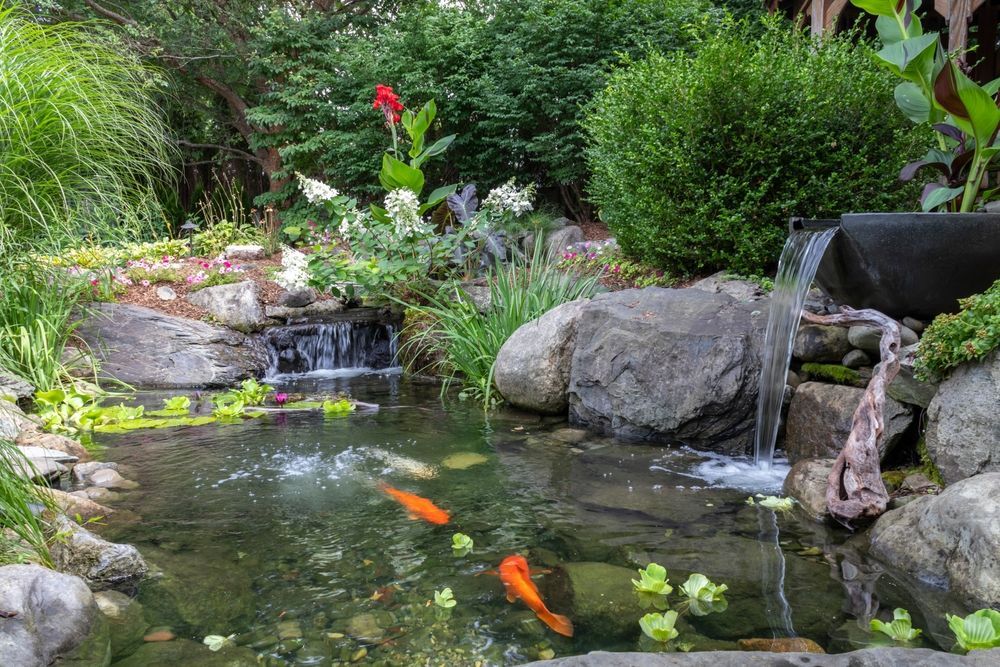
How Construction and Filtration Work Together
Pond installation begins with excavation and leveling to create the basin shape. A flexible rubber liner is laid across the excavated area and secured along the edges with stone or soil. The liner prevents water from seeping into the surrounding ground. Once the basin is formed, Ness Landscaping LLC installs the pump and filtration system, which may include mechanical filters, biological media, and UV clarifiers depending on the pond's size and purpose.
After the system is in place, rocks are arranged around the perimeter and within the waterfall structure to guide water flow and create a natural appearance. You'll hear the sound of water cascading over stone as soon as the pump is activated. The pond fills to its designed depth, and aquatic plants or fish can be added once the water chemistry stabilizes. The finished feature operates with minimal input—you'll need to check the pump periodically, clean filters as needed, and top off water lost to evaporation.
Low-maintenance designs prioritize skimmers and bottom drains that reduce manual cleaning. Repairs and upgrades are available for ponds that have developed leaks, outdated pumps, or poor circulation. Winterization may involve removing pumps or adding aeration equipment to prevent ice damage. This service does not include landscape lighting, decking, or irrigation—those elements are coordinated separately if you want them integrated with the water feature.
What to Know Before You Build
Clients often ask about maintenance expectations, fish compatibility, and how ponds perform during Minnesota winters, when ice and snow are part of the equation for months at a time.
What size pond works best for a typical residential yard?
Most backyard ponds range from 150 to 500 gallons. Larger volumes are more stable in terms of temperature and water quality, but they require more powerful pumps and filtration systems.
How do you prevent algae from taking over the pond?
Proper filtration, adequate circulation, and the right balance of sunlight and shade keep algae in check. Adding aquatic plants also helps by competing with algae for nutrients in the water.
Can fish survive winter in an outdoor pond in Clearwater?
Koi and goldfish can overwinter in ponds deeper than three feet if a portion of the surface is kept open with a pond heater or aerator. Shallow ponds may require fish to be brought indoors.
Why do some ponds lose water even without visible leaks?
Evaporation and splashing from waterfalls account for gradual water loss. If the drop is more than an inch per week, the liner or plumbing connections may need inspection.
What happens if the pump stops working?
Ness Landscaping LLC can replace or repair pumps and check for clogs in the intake or filter. Stagnant water loses oxygen quickly, so addressing pump failure promptly is important if fish are present.
If you're considering a pond or waterfall and want to understand what's involved in construction and upkeep, contact Ness Landscaping LLC to review your site and discuss filtration options suited to your goals.